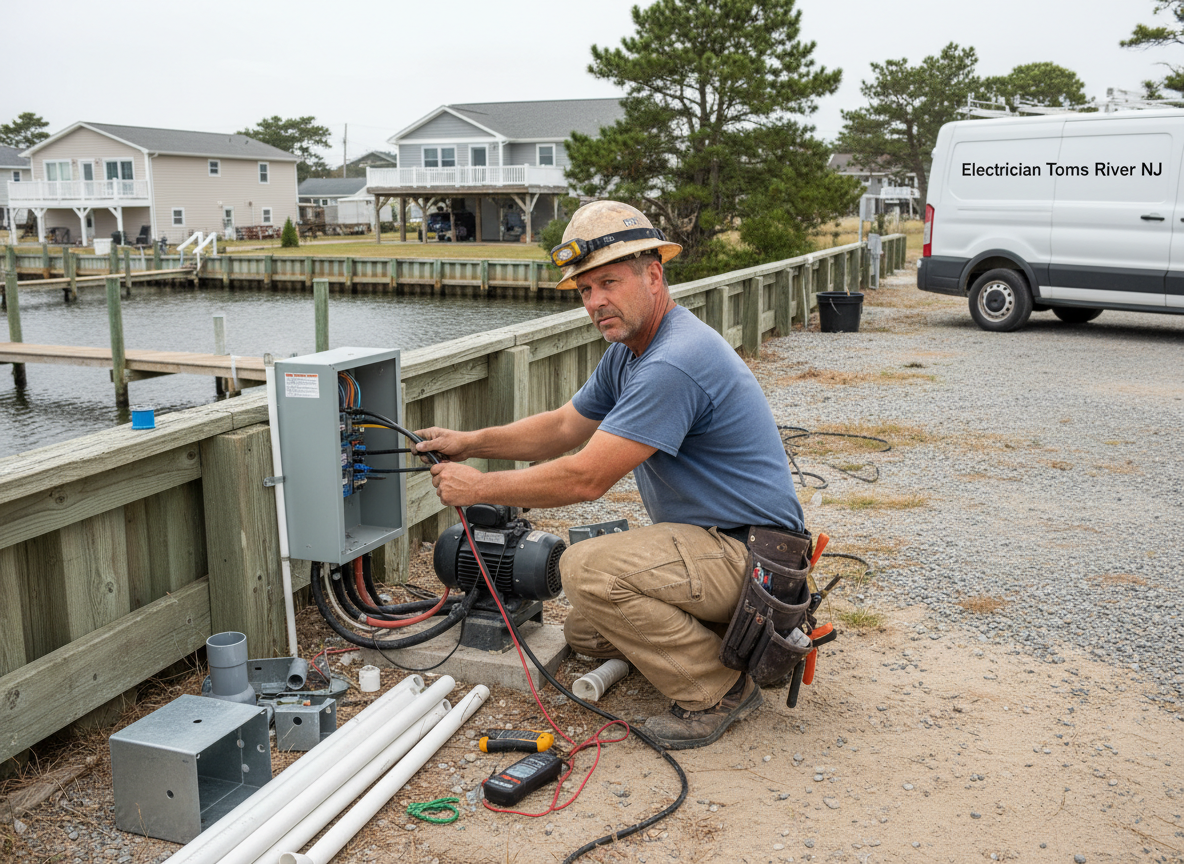
A pool electrician handles the wiring rules that apply only around water: equipotential bonding, GFCI protection, dedicated equipment circuits, spa feeds and the placement limits for receptacles, switches and lighting near the water. Electrician Toms River NJ wires new pools and spas, corrects bonding on existing ones, and troubleshoots the nuisance tripping that plagues coastal pool equipment. Diagnosis starts with a continuity check on the bonding grid. We verify that the 8 AWG solid copper bonding conductor actually ties the shell steel, the perimeter deck surface, the ladder and handrail anchors, the pump motor, the heater, the light niche and any metal within 5 feet of the inside wall into one grid.
Bonding is the part homeowners most often misunderstand. It is not grounding. Grounding gives fault current a path back to the source; bonding holds every conductive surface a swimmer can touch at the same voltage so there is no difference for current to cross. A pool can be perfectly grounded and still give tingle shocks because a section of the grid is corroded open, a bonding lug on a replacement pump was never reconnected, or the deck bonding was omitted during a resurfacing. The classic call is a homeowner who feels a tingle at the ladder after a new pump was swapped in, and the cause is a single 8 AWG conductor lying loose behind the equipment pad.
Toms River adds two conditions that make pool work harder than it is inland. The first is salt air. On bayfront, lagoon and barrier island properties, split bolt bonding connections corrode, pump lugs pit, outdoor disconnects fail at the hinge and GFCI receptacles fail closed or trip randomly within a few seasons. Direct burial bonding conductors near a lagoon sit in soil that stays wet and salty. Corrosion resistant enclosures, listed direct burial connectors and stainless hardware are not upgrades here, they are what lasts. The second is water table and flood elevation. Equipment pads on low lying lots flood, and pump motors and disconnects that sit at grade take standing water. On raised properties, spa feeds and equipment circuits need to be routed and raised so they are not sitting in a flood path.
Permitting is not optional for pool wiring. Electrician Toms River NJ files the electrical permit with the Toms River Township Building Department, and pool bonding gets a rough inspection while the bonding grid is still exposed, before concrete or deck material covers it. That timing matters: if the deck is poured before the inspection, proving the grid may mean opening it. Under the electrical subcode of the New Jersey Uniform Construction Code, the inspector will check the bonding conductor size and connections, GFCI protection on the pump, heater, lighting and any receptacle serving the pool, the required equipment disconnect within sight of the equipment but at a set distance from the water, receptacle placement and height, overhead conductor clearances, and the low voltage or GFCI protected supply to underwater lighting.
Field problems worth knowing: a variable speed pump can trip a GFCI because of the drive's leakage current, and swapping breakers repeatedly will not fix it, the circuit and the grounding path need to be verified instead. Salt chlorine generators put an electrolysis load on the system, and a weak bonding grid shows up as accelerated corrosion on ladders and rails long before anyone feels a shock. Hot tub feeds are frequently undersized: a 50 amp spa on a 6 AWG run that is too long will brown out the heater and blame will land on the spa pack. Underwater light niches on older pools may have deteriorated cord seals that leak water into the conduit. And a pool that was resurfaced or a deck that was replaced almost always broke the perimeter bonding, whether or not anyone noticed.
Technician insight
The thing that catches people out around pools here is that bonding is not grounding. A pool can be grounded correctly and still hand you a tingle at the ladder, because one section of the 8 AWG grid corroded open or a bonding lug never went back on after a pump swap. On the lagoon and bayfront streets in Toms River, salt air pits split bolts and pump lugs within a few seasons, so I use listed direct burial connectors and corrosion resistant enclosures as a matter of course. The other one is timing: bonding gets its rough inspection while the grid is still exposed, and once a deck is poured over it, proving the grid can mean opening the concrete.
Tingle At The Ladder On A Gilford Park Lagoon Property
A waterfront home in Gilford Park, a 1970s split level on a lagoon, had swimmers reporting a faint tingle at the pool ladder after a new filter pump was installed. Point to point continuity testing across the bonding grid showed the deck and rail anchors reading open back to the equipment pad, and behind the pad the 8 AWG bonding conductor was lying loose where the old pump had been removed. A second section near the lagoon side had corroded through at a split bolt sitting in wet, salty soil. We re-terminated the grid with listed direct burial connectors, bonded the new pump motor lug, and retested every point to confirm continuity before the equipment went back in service.
Pool Electrician Services We Offer
✓Pool and Spa Equipotential Bonding
Installing or repairing the 8 AWG solid copper bonding grid tying shell, deck, rails, ladders, pump, heater and nearby metal into a single equipotential plane.
✓Bonding Continuity Testing and Tingle Voltage Diagnosis
Point to point testing across the grid to locate corroded or disconnected sections when swimmers report tingling or the pool is failing inspection.
✓Pool Equipment Circuit Installation
Dedicated GFCI protected circuits and a properly located equipment disconnect for the filter pump, booster pump, heater, salt cell and automation panel.
✓Hot Tub and Spa Feed Installation
A dedicated feeder to a GFCI spa panel disconnect within the required distance of the spa, sized for the manufacturer's load and run length.
✓Underwater Pool Light Wiring and Replacement
Wiring low voltage or GFCI protected pool lighting, replacing failed niche fixtures and correcting deteriorated cord seals and conduit entries.
✓Outdoor Receptacle Installation near Pools
Weather resistant, in use covered, GFCI protected receptacles placed within the required distance band from the pool wall and at the correct height.
✓Pool Panel and Subpanel Installation
A dedicated outdoor subpanel at the equipment pad in a corrosion resistant enclosure, with correct feeder sizing, isolated neutral and separate grounding bar.
✓Coastal Corrosion Repair on Pool Equipment
Replacing pitted lugs, corroded split bolts, failed disconnects and degraded GFCI devices on bayfront and lagoon properties with corrosion resistant components.
How it works
- 1
Bonding And Circuit Survey
We test the existing bonding grid for continuity, map the equipment circuits, and check GFCI protection, disconnect location and receptacle placement against current requirements.
- 2
Scope And Permit
We define the work, size the feeders and bonding conductor, and file the electrical permit with the Toms River Township Building Department.
- 3
Bonding Rough And Equipment Wiring
The bonding grid is installed or repaired and inspected while exposed, then equipment circuits, disconnects, spa feed and lighting are wired.
- 4
Test, Energize And Final
We verify continuity across the grid, test every GFCI device under load, run the equipment, then meet the inspector for the final under the New Jersey Uniform Construction Code.
Pricing
Pool electrical cost depends mostly on how much is already in the ground. Wiring a new pool during construction, while the bonding grid and conduit can be set before concrete, is the efficient version. Retrofitting bonding on an existing pool with a finished deck is the expensive version, because reaching the shell steel and the perimeter may mean cutting and patching. A hot tub feed is priced on distance from the panel, conductor size and whether the run is trenched, in conduit or through a finished space. Panel capacity matters: if the existing service has no room for a pool subpanel, that becomes part of the job. Coastal properties cost a bit more in materials because corrosion resistant enclosures, connectors and hardware are worth the difference. Permits and inspections are separate.