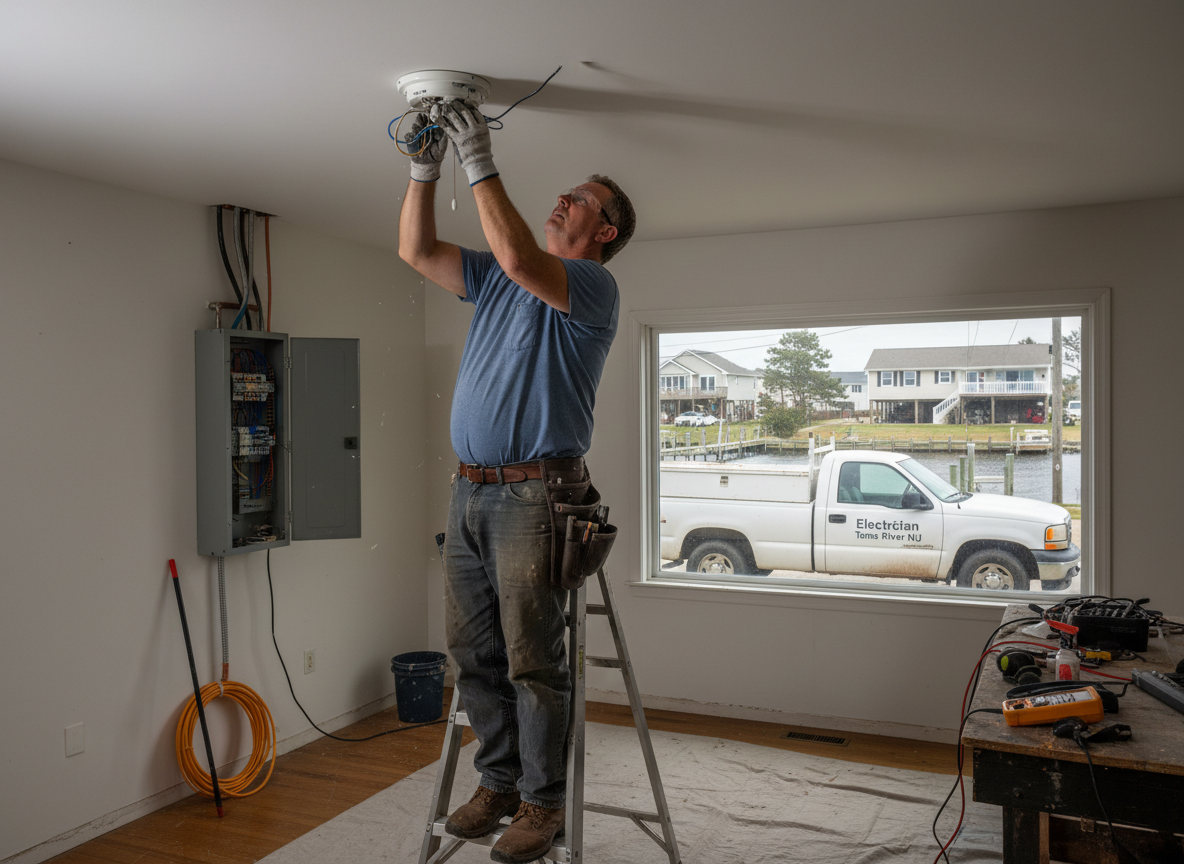
Ceiling fan installation means mounting the fan on a listed fan rated box that is anchored to structure, wiring it for the control you want, and confirming blade clearance and balance. Electrician Toms River NJ replaces existing fans, converts light only outlets into fan locations, and runs new circuits where no ceiling box exists. The first thing we check is the box, not the fan. A standard plastic or pancake fixture box is rated for a static light fixture, not for the dynamic load and vibration of a rotating fan. If it is not stamped for fan support, it is replaced with a listed fan brace or a box fastened to a joist.
Diagnosis on a replacement takes a few minutes. We drop the canopy and look for how many conductors are present, whether there is a neutral at the switch, whether a previous installer used the ground as a traveler, and whether the box moves when pushed. Wobble is almost never the fan. It is a loose mounting bracket, a box that flexes, unmatched blades or a bent blade iron. Downrod length matters too. Blades belong at least 7 feet above the floor and about 8 to 10 inches below the ceiling to move air, which is why a hugger mount on a 9 foot ceiling underperforms and a long downrod on an 8 foot ceiling becomes a hazard.
Toms River housing stock complicates this in predictable ways. Holiday City and Silver Ridge Park ranches were built with ceiling boxes intended for a single flush light and often no separate switch leg, so adding a fan usually means fishing a three conductor cable or fitting a remote receiver. Slab on grade construction with no basement means every wire is fished through the attic. Older homes near downtown and the river can still have cloth insulated conductors that crumble at the box, and adding a fan means repairing back to sound wire. Humid summers push fans hard from May through September, and seasonal rental turnover means fans that were installed fast and never balanced. On screened porches and covered decks on the bay side, a dry rated fan will corrode and sag: those need a damp or wet listed fan and a weather rated box.
The New Jersey Uniform Construction Code governs the work, and the electrical subcode follows the NEC. A simple like for like fan swap on an existing fan rated outlet does not normally require a permit, but adding a new ceiling outlet, running a new branch circuit, adding a switch leg or wiring an outdoor rated fan on a porch is permitted work inspected by the Toms River Township Building Department. Where new wiring is concealed, that means a rough inspection before the ceiling closes and a final afterward. Bedroom circuits fall under arc fault protection requirements, so extending a bedroom circuit for a fan can mean the circuit needs an AFCI breaker to comply.
Field problems that a homeowner rarely anticipates: a fan hung from a box that is screwed to lath rather than a joist will loosen over a season of use. A remote receiver crammed into a shallow canopy overheats and fails, and the symptom looks like a bad fan motor. Reversing a fan for winter does nothing if the blades were installed upside down, which happens more than you would think. Fans on a dimmer meant for incandescent lighting will hum and eventually damage the motor, so the fan speed control has to be the type the manufacturer specifies. And on lagoon and bayfront porches, salt air seizes the reverse switch and pits the blade irons within a few seasons if the fan is not wet rated.
Technician insight
The thing that catches people out on fans in Toms River is the box, not the fan. A standard fixture box is rated for a static light, so once a rotating fan starts pulling on it the screws work loose over a season, and people blame the motor. The other one I see in Holiday City and Silver Ridge Park ranches is that there is only one switch leg at the ceiling, so a homeowner ends up controlling the light and the fan together until we fish a three conductor cable or fit a receiver. And on bay side porches, an indoor fan put outside will pit at the blade irons and seize the reverse switch inside a couple of seasons.
Wobbling Fan In A Holiday City Ranch
A single story slab ranch in Holiday City had a bedroom fan that shook on high and had started making a knocking sound at the canopy. Dropping the canopy showed the fan hanging from a plastic light fixture box screwed to the ceiling lath rather than to a joist, and the box flexed visibly when pushed. We fitted a listed expanding fan brace between the joists through the existing opening, remounted the fan on a fan rated box, and replaced one blade iron that had bent. The fan then ran clean through every speed forward and reverse with no vibration at the canopy.
Ceiling Fan Installation Services We Offer
✓Ceiling Fan Replacement
Removing an existing fan and installing a new one on the same outlet, including verifying the support box is fan rated and correcting it if not.
✓New Ceiling Fan Circuit and Box Installation
Cutting in a fan rated box where no ceiling outlet exists, fishing cable from an existing circuit or a new branch circuit, and installing the wall control.
✓Fan Rated Box and Brace Retrofit
Replacing a light only box with a listed expanding brace or joist mounted fan box through the existing ceiling opening, no drywall repair in most cases.
✓Sloped and Vaulted Ceiling Fan Installation
Angled mount adapters and longer downrods for cathedral ceilings, with clearance calculated so blade tips stay well clear of the slope.
✓Outdoor and Porch Fan Installation
Damp or wet listed fans on covered decks, screened porches and lanais, with corrosion resistant hardware and a weather rated outlet box.
✓Fan Switch, Remote and Speed Control Wiring
Separate wall controls for fan and light, three conductor switch legs, remote receivers and wall mounted speed controls matched to the motor type.
✓High Ceiling and Two Story Foyer Fan Installation
Fan installation at height using proper access, including downrod selection and balancing where the fan cannot be easily reached later.
✓Fan Balancing and Wobble Correction
Diagnosing and correcting wobble, noise and vibration from loose brackets, flexing boxes, bent blade irons or mismatched blade sets.
How it works
- 1
Location And Support Check
We confirm ceiling height, joist position and whether the existing box is fan rated, then decide between a brace, a joist box or a new cut in.
- 2
Wiring And Control Path
We identify the conductors present and either use the existing switch leg, fish a three conductor cable for separate fan and light control, or fit a remote receiver.
- 3
Mount, Assemble And Wire
The bracket is fastened to structure, the downrod is set to the right length, the fan is hung, wired and canopy closed with blades installed evenly.
- 4
Balance And Test
We run every speed forward and reverse, check for wobble and noise, balance the blade set if needed, and confirm the light and fan controls behave separately.
Pricing
A straight swap onto an existing fan rated box is the least expensive version of this job and is usually measured in a single visit hour. Cost climbs when the box has to be replaced, when the ceiling is above 9 feet, when the ceiling is vaulted and needs an angle mount and a long downrod, or when there is no ceiling outlet at all and cable has to be fished through an attic or a slab on grade ranch with limited access. Adding a separate switch leg so the light and fan work independently adds wiring. Outdoor rated fans on covered porches cost more in materials and in weather rated boxes and hardware. Homes with cloth wiring or aluminum branch wiring may need conductor repair at the box before anything is hung. Permitted work with an inspection adds a fee and a scheduled visit.