2026-08-31 · Nick Petrucci
What Gets Checked During an Electrical Inspection Before a Home Sale in New Jersey
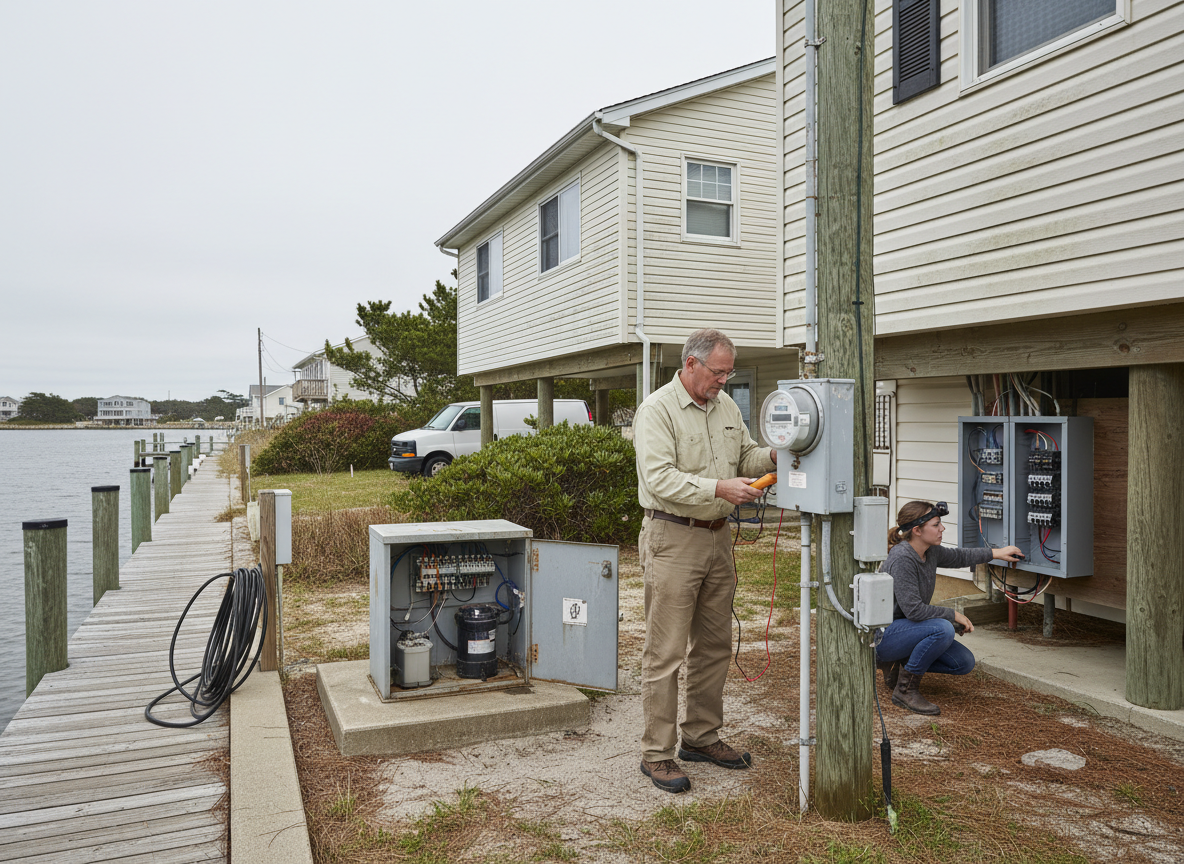
New Jersey does not require a statewide electrical certificate to sell a house. Three separate reviews touch the wiring: the required smoke alarm, carbon monoxide alarm and fire extinguisher certificate from the local fire official, the buyer's private home inspection, and in some towns a continued occupancy inspection. The home inspection is where electrical problems surface.
The Three Checks, and Which One Has Teeth
The one legally required inspection before a residential resale in New Jersey covers smoke alarms, carbon monoxide alarms and a portable fire extinguisher. The local fire official issues that certificate, and it is a life safety check, not an electrical code review. It confirms alarms are present in the right locations, that they work, and that the extinguisher meets the requirement. It does not look at your panel.
The home inspection the buyer orders is the one that generates the repair list. A licensed New Jersey home inspector is a generalist, not an electrician, and works from a standardized report format. That inspector reports conditions and recommends evaluation by a qualified contractor. This is where phrases like "recommend evaluation by a licensed electrician" get written, and where a deal starts to slow.
A municipal certificate of continued occupancy or resale inspection exists in some towns and not others, and the scope varies where it does exist. It is usually a visual check for unpermitted alterations and obvious hazards rather than a full electrical review. What it reliably surfaces is finished basements, added bathrooms and converted garages that never had a permit.
What the Inspector Actually Writes Up
The list is predictable, and it is heavily weighted toward the panel and the outlets, because those are what a generalist can see and test.
- Missing GFCI protection at kitchen counter receptacles, bathrooms, garages, outdoor receptacles, basements and near pools and hot tubs.
- Missing AFCI protection where the panel has been replaced recently enough that it should have been added.
- Open grounds and reversed polarity at receptacles, found with a three light tester in seconds.
- Ungrounded two prong outlets, common in the older housing near downtown and along the river.
- Double tap connections, two conductors under one breaker lug not rated for it.
- Panel issues: missing knockout fillers, missing dead front cover, oversized breakers on undersized conductors, neutrals and grounds landed together in a subpanel.
- Federal Pacific Stab-Lok and Zinsco panels, which get flagged on sight in Holiday City, Silver Ridge Park and other Toms River neighborhoods built in that era.
- Junction boxes with no cover, splices outside a box, and open wiring in attics and crawlspaces.
- Aluminum branch wiring, another feature of 1960s through 1970s construction here.
- No visible grounding electrode conductor or ground rod at the service.
- Corroded meter base, service mast and outdoor disconnects, which on bayfront and barrier island property is a salt air problem long before it is an age problem.
The Mechanism Behind the Two That Scare Buyers Most
Stab-Lok and Zinsco panels get written up for a reason that is mechanical rather than cosmetic. In both designs the breaker connection to the busbar can degrade so the breaker holds a load but does not reliably interrupt a fault. The failure is silent. Nothing looks wrong from the front, the lights work, and the homeowner has no symptom to notice. That is why an inspector flags the label on the panel rather than any observed defect, and why "it has never given us trouble" is not a rebuttal.
Aluminum branch wiring fails differently. Aluminum expands and contracts more than copper under load and creeps under a screw terminal, so a connection that was tight at installation loosens over years of heating cycles. The loose connection heats, oxidizes, and heats more. Symptoms come late: a warm cover plate, a flickering fixture, an outlet that intermittently drops. The accepted repairs are pigtailing with a listed connector such as COPALUM or AlumiConn at every device, or rewiring. Wire nuts and standard receptacles are not a fix, and an antioxidant paste alone is not a fix.
Diagnosing It Before the Buyer Does
If you are selling, walk your own house first with a plug in receptacle tester and a flashlight. Test every GFCI with its own test button, not just the tester, because a device that trips on the tester but will not reset is already failed. Open the panel cover only if you know what you are looking at, otherwise photograph the label and the breaker layout with the cover on.
What an electrician checks first on a pre sale visit is the service: the amperage stamped on the meter base and main breaker, whether it is 100 amp or 200 amp, whether the service entrance conductors match, and whether the grounding is intact and bonded. Then the panel interior, then the branch circuits. The common misdiagnosis on this list is treating an open ground as a wiring fault when the house simply predates grounding. That is not damage, it is an ungrounded system, and the remedy is different: a GFCI receptacle with a "no equipment ground" label is a code recognized option where running a new ground is impractical.
The other frequent misread is blaming the panel for flickering that is actually a loose neutral at the service or a failing utility connection. Flickering across the whole house, brightening on one side while dimming on the other, or bulbs burning out fast in one area points at the neutral, and that condition can damage electronics. It gets checked with a meter at the panel before anybody prices a panel replacement.
What to Do, and When It Stops Being a Negotiation Item
Sequence the repairs. Fix the cheap safety items yourself or with an hour of an electrician's time: GFCI receptacles, missing cover plates, box covers, breaker labels. Get a real quote on the larger items, because a written contractor quote is a better negotiating document than a home inspection line item that says "evaluate." A panel replacement or a rewire discovered at inspection almost always costs more in a price concession than it would have cost to do before listing.
It stops being a negotiation and becomes urgent when you find a burning or fishy plastic smell near the panel, scorch marks or melted insulation at any device, a breaker that trips immediately on reset, a panel that is warm to the touch, or any moisture inside a panel enclosure. Shut off the affected circuit or the main and get it looked at that day. The same applies to any service equipment that was submerged in a past flood and never replaced, which in the flood affected sections of Toms River is still occasionally found behind a finished wall. If a home inspection has already flagged something and you want it read properly before you respond, have an electrician evaluate it rather than guessing at the cost.
Frequently Asked Questions
Does New Jersey require an electrical inspection to sell a house? No. There is no statewide electrical certificate required for a residential resale. The one mandatory pre sale inspection covers smoke alarms, carbon monoxide alarms and a portable fire extinguisher, issued by the local fire official. Some municipalities separately require a continued occupancy inspection with its own scope. Electrical conditions usually surface through the buyer's private home inspection instead.
Will a Federal Pacific panel stop a sale? Not automatically, but it changes the conversation. Buyers, and sometimes their insurers, ask for it to be addressed, and a lender occasionally follows. The concern is that these breakers can fail to trip on a fault without any outward symptom. Sellers generally either replace the panel before listing or price the replacement into the negotiation with a written contractor quote.
Should I fix electrical items before listing or negotiate them after? Fix the small safety items before listing and get quotes for the large ones. GFCI receptacles, cover plates and labeling are inexpensive and remove several lines from the report. Panels, rewiring and service upgrades usually cost more as a buyer concession than as a completed job, and a permitted, inspected repair is documentation you can hand the buyer.
Related reading: what a pre sale electrical evaluation covers.