2026-08-31 · Nick Petrucci
How the Toms River Township Building Department Handles Electrical Permits
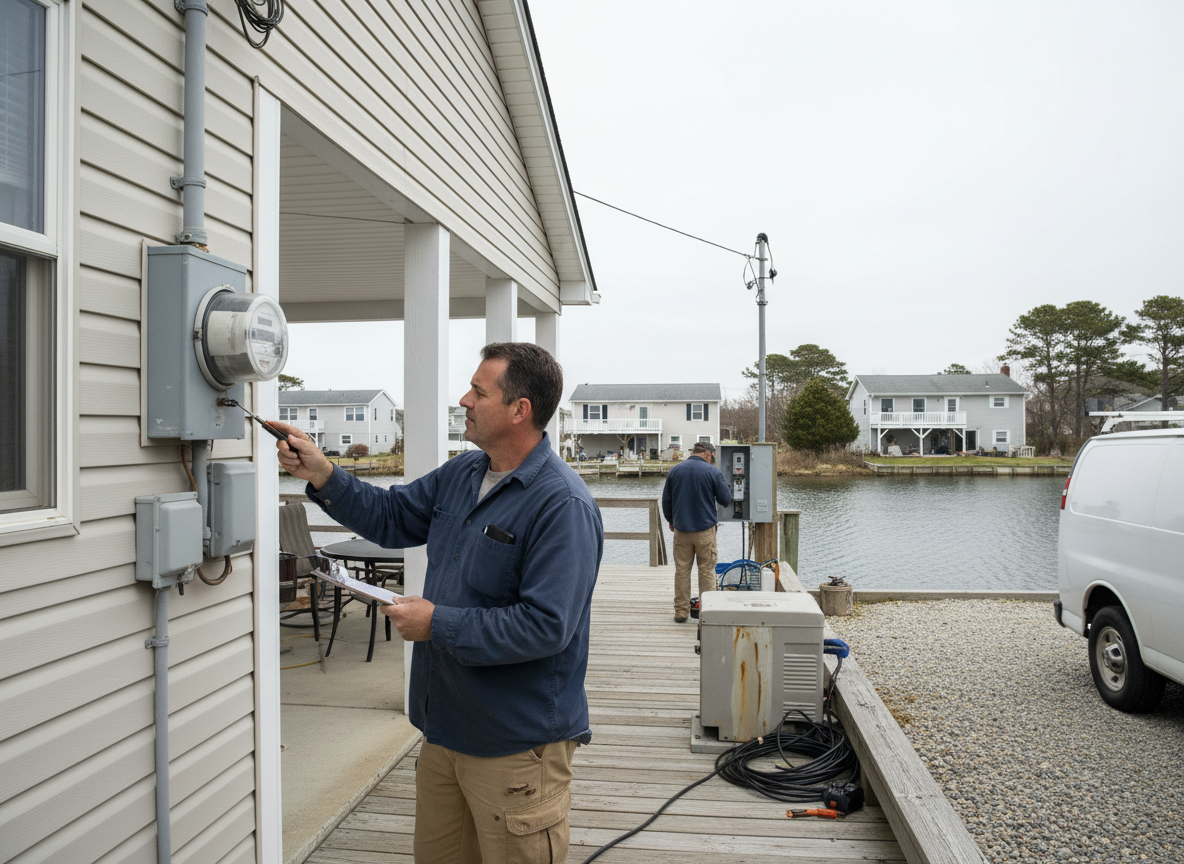
Electrical permits in Toms River Township are issued and inspected under the New Jersey Uniform Construction Code. A licensed contractor files a permit application with an electrical technical section, the electrical subcode official reviews it, and the work is inspected twice: a rough inspection before walls close, and a final inspection before the circuit goes into service.
Who Actually Issues the Permit and Who Inspects It
New Jersey does not leave permitting to each town's improvisation. The New Jersey Uniform Construction Code sets one statewide framework, and Toms River Township's Building Department administers it locally. The department houses subcode officials for building, plumbing, fire and electrical. Electrical work is reviewed and inspected by the electrical subcode official and the electrical inspectors working under that office, using the electrical subcode, which adopts a version of the NEC with New Jersey amendments.
That structure matters more than homeowners expect. The inspector is not evaluating whether the work looks tidy or whether the price was fair, only whether the installation complies with the code edition adopted on the date the permit was issued. Those editions change on a schedule set by the state, so an installation that passed five years ago may not pass today.
In New Jersey, electrical contracting is licensed at the state level by the New Jersey Board of Examiners of Electrical Contractors, not by the township. The township verifies that the contractor filing the permit holds a valid state license and carries insurance. A homeowner can pull a permit for work on a single family home they own and occupy, but the inspection is not softened for them.
What the Application Actually Contains
A construction permit package for electrical work is a jacket sheet plus an electrical technical section. The technical section is where the real information lives, and it is a count, not a narrative. It asks how many receptacles, switches and lighting outlets, how many fixtures, how many motors and what horsepower, how many appliances and at what rating, whether there is a service and at what amperage, whether there are subpanels, whether the job includes a pool, a hot tub, a generator, solar, or an EV charger. Fees are calculated from those counts and from the state and township fee schedules in effect, so the count is not a formality.
Where jobs go sideways at intake is usually scope. A service panel upgrade filed as a simple swap becomes a different job when the inspector reads that the service entrance conductors, meter base and grounding electrode conductor are all being replaced. In flood zone areas of Toms River such as Ortley Beach, Silverton and Snug Harbor, relocating service equipment above base flood elevation pulls in flood zone review as well, because where the meter and panel are allowed to sit is a floodplain question before it is an electrical one. Filing the panel work without disclosing the relocation is the most common way a permit gets held.
Rough Inspection Versus Final Inspection
The rough inspection happens after the wiring is installed and before it is covered. The inspector wants to see cable and conduit runs, box fill, support and stapling, connections at boxes, cable protection where a run passes through a stud within striking distance of a nail, grounding and bonding, and the panel with conductors landed but nothing hidden. Insulation, drywall and paneling all come after this passes. Closing a wall before the rough inspection is the mistake that costs real money, because the remedy is opening it again.
The final inspection happens with the work energized and complete. Devices are in, cover plates are on, fixtures hang, the panel directory is filled out, and breakers are labeled. The inspector tests GFCI and AFCI protection where required, checks polarity and grounding at receptacles, confirms working clearance in front of the panel, and verifies that what was installed matches what was permitted. Some jobs get additional inspections in between, for example a service inspection before the utility reconnects, or a bonding inspection on a pool before the deck is poured, which is one of the few inspections that genuinely cannot be repeated later.
What Needs a Permit and What Does Not
The Uniform Construction Code separates work into ordinary maintenance and minor work, which have lighter requirements, and everything else, which needs a permit before work starts.
- Replacing a light fixture, a switch, or a receptacle with the same type and rating is generally treated as maintenance and does not require a permit.
- New circuits, added receptacles or outlets, service changes, panel replacements, subpanels, generator transfer equipment, EV chargers, pool and hot tub wiring, and rewiring all require a permit.
- Minor work provisions allow certain limited work to begin with the permit application filed rather than issued, but the inspections still happen.
- Emergency repairs after a storm can be started to restore safe service, with the permit filed promptly after. The repair is still inspected.
The gray area that catches people is the fixture swap that quietly becomes new work. Replacing a ceiling fixture with a ceiling fan adds weight the box may not be rated for, and adding a receptacle to an existing circuit is new work no matter how short the run.
Timing, and What Actually Drives It
Timing varies, and anyone quoting a fixed turnaround is guessing. Under the Uniform Construction Code the department has a defined period to grant or deny a complete application, but the clock only runs on a complete one. Incomplete technical sections, missing insurance certificates, undisclosed scope and flood zone review all pause it. Inspection scheduling depends on inspector availability and the volume the department is carrying, which rises sharply in the weeks after a coastal storm when service repairs stack up across Ocean County.
The lever a homeowner has is being ready when the inspector arrives: panel accessible, no stored boxes in the working clearance, attic and crawl access open, dog put away, permit card posted. A failed inspection for access is a full re-inspection.
When It Becomes a Safety Issue
Unpermitted electrical work is not only a code problem. It is uninspected work, which means nobody with training ever confirmed the grounding, the conductor sizing, or the overcurrent protection. That surfaces later in two ways. First, at sale or refinance, when a title search or an appraisal turns up an open permit or an addition with no electrical record, and the closing stalls until it is resolved. Second, at a claim, when an insurer looks at a fire or water loss and finds the panel or the generator connection was never permitted.
Treat it as urgent, not administrative, if you find scorching at a panel, a double tap on a breaker, a subpanel with neutrals and grounds sharing a bar, or a service never re-inspected after a flood. Shut that circuit off and have it looked at before you worry about paperwork. If you want a straight read on whether a job needs a permit, ask an electrician who files locally before you start.
Frequently Asked Questions
Can a homeowner pull an electrical permit in Toms River? Yes, for a single family home you own and occupy. New Jersey allows a homeowner to file for work on their own primary residence, and the same code and the same inspections apply. You cannot pull a homeowner permit for a rental, a property you do not occupy, or a commercial building, and you cannot pull one on behalf of a contractor doing the work.
How long does an electrical permit take in Toms River? It varies, and the biggest factor is whether the application is complete. A straightforward filing with full technical section, contractor registration and insurance moves faster than one missing pieces. Flood zone review, zoning review and undisclosed scope changes all add time, and inspection scheduling slows after coastal storms when service repair volume spikes across Ocean County.
What happens if work was done without a permit? It usually gets resolved by filing after the fact and exposing the work for inspection. That can mean opening finished walls or ceilings so the inspector can see the rough wiring, since it was never inspected before being covered. Some townships apply a higher fee for work started without a permit. The alternative, leaving it undisclosed, tends to surface at sale or refinance.
Related reading: what an inspector checks at a final electrical inspection.